Urbane Praxis
Practices in the city
Berlin has a long history of people working somewhere between art, architecture, urban planning and community organising. They build temporary structures, activate unused spaces, organise collective processes, create meeting places and experiment with different ways of making and using the city.
Yet these practices often fall between established categories. Culture sees them as urban development. Urban planning sees them as cultural activities. Social policy sees them as temporary projects rather than long-term infrastructure. As a result, many initiatives depend on short-term funding, temporary permissions and the enormous personal commitment of the people involved.
Meanwhile, policy documents are full of ambitions around sustainability, inclusion, participation and social cohesion. Cities want more engaged citizens, stronger communities and more lively public spaces. But the people who actually develop practical ways of bringing these ambitions into everyday urban life often struggle to find recognition, space and structural support.
Giving a practice a name
In 2020, the Rat für die Künste Berlin brought together artists, architects, designers, urban activists and community organisations to address this contradiction. Among the initiators were people from raumlaborberlin and other organisations that had been working in this field for decades.
The idea was surprisingly simple: give an existing field of work a shared name: Urbane Praxis.
Until then, the work had been described through many different terms: temporary architecture, socially engaged art, participatory design, urban activism, placemaking or cultural programming. Each captured something, but none described the whole practice. By introducing Urbane Praxis, these activities could be understood as part of a larger field. Not as a collection of cultural side projects, but as a form of city-making in its own right.


Changing the conversation
This changed the conversation. Instead of asking for support for individual projects because they contribute to the city’s social or environmental goals, the argument became that Urbane Praxis itself produces public value. It creates opportunities for people to take part in shaping their surroundings, builds the capacity to act together and makes different futures imaginable. It is not simply a way to activate spaces that have already been planned. It is a practice that can help shape how the city develops.
It also challenges the way cities are traditionally planned. Rather than starting with a fixed idea of what a place should become, Urbane Praxis works with what is already there: the people, their knowledge, their needs and the possibilities of a particular situation. The role of the designer changes along with it. Less about providing finished solutions, more about creating the conditions in which others can take part, experiment and shape their surroundings.
Beyond temporary projects
But there is a contradiction here too. Cities increasingly ask citizens and local initiatives to take responsibility for their surroundings, while access to space, resources and public support often becomes more difficult. Urbane Praxis should not become a cheap substitute for public services or a way for governments to step away from their responsibilities. If this work matters to the city, it needs to be taken seriously, with access to space, resources, political recognition and long-term support.


Making it visible
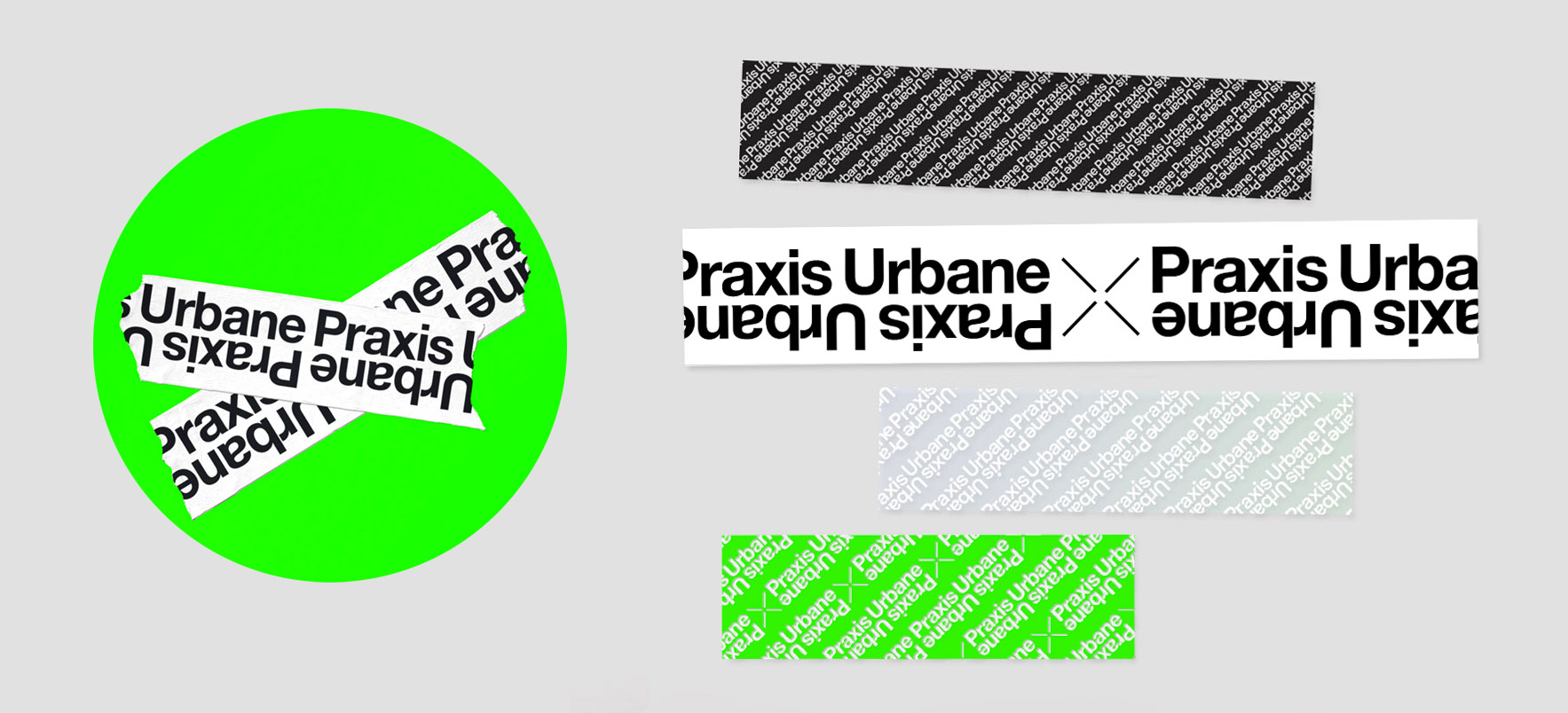
Collective Works became involved at the very beginning, developing the visual identity, billboards, first website, social media and public interventions together with the people behind the initiative. The identity was not simply there to represent an organisation. It helped introduce a new term into the public conversation, making it visible and recognisable across the city.
The initiative also developed its own vocabulary, publications and manifesto, bringing together the experiences and ideas of a broad network of practitioners. What began as an effort to name and connect an existing field gradually became a public programme, an association and a recognised part of Berlin’s urban development discussions. Dedicated funding structures followed, although the struggle for long-term support continues.
Sometimes giving something a name is the first step towards giving it a place.
What makes Urbane Praxis interesting is that it did not invent a new way of working. These practices had existed for decades, often operating at the edges of established institutions. Instead, it brought them together under a shared identity and made a political argument for their relevance.